
Animal welfare on Rovaniemi husky tours
Sled dogs are working dogs, and kennels differ. Here is what to look for and what reviewers have seen.
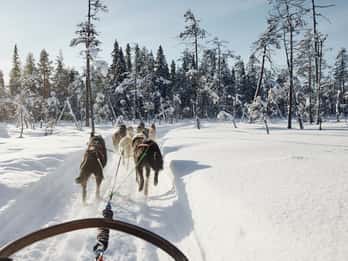
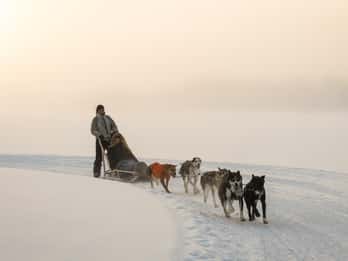
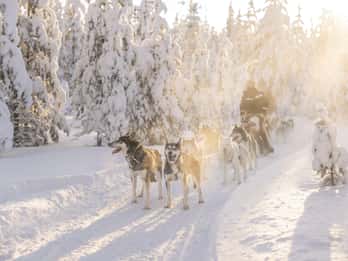
Whether a husky ride is good for the dogs depends on the kennel, not on the idea of sledding. Alaskan huskies are working dogs bred to run, and at a good kennel you can see it. A booking page tells you little about how the dogs live, so this page collects what to look for, what reviewers have praised and what they have criticised, including the critical voices.
What a good kennel looks like
- Dogs that want to run. The clearest signal: teams that bark and jump with excitement at harness time and pull eagerly. Listless or fearful dogs are the opposite signal.
- Protected paws. In cold, sharp snow many mushers fit their dogs with booties. One reviewer noticed exactly that: the dogs’ feet were protected.
- Space and company. Look at where the dogs live when they are not running: room to move, clean ground, shelter, and contact with other dogs.
- Rest between runs. Ask how many runs a team does in a day and how the dogs are rotated. Teams that go out with one group after the next have little rest.
- Mushers who know every dog. Good guides talk about individual dogs: names, character, who runs next to whom.
- A plan for retirement. Ask what happens to dogs that are too old to run. One reviewer’s guide explained the kennel’s rehoming programme for retired dogs.
- Openness. Kennels confident in their standards let you see where the dogs live and answer questions.
What reviewers criticise
Most reviews in our collection that mention the dogs describe them as friendly and well cared for; one reviewer was struck by how a team spoke of its dogs as coworkers. The critical voices about housing concern the very short farm rides. One reviewer of a farm visit describes dogs kept in cages, which limited the interaction; another writes that the huskies were kept in pairs in kennels she found too small, on a circular route of a few hundred metres. At a busy passenger camp, a third reviewer notes that the teams run one group after the next.
We show these reviews as they were written, and we do not draw conclusions about any operator from a single visit. What they tell you is where to look: at how the dogs are housed, how often they run, and whether there is time for them (and for you) between runs.
Sled dogs are bred for distance, and a well-run safari with rest stops fits what they do. Short rides are not a problem in themselves either. What matters is how many runs a team does, how the dogs rest and how they live between runs. If you want time with the dogs rather than a quick loop, choose a tour with a kennel visit built in.
What you can do as a guest
- Watch the harness moment. Eager dogs tell you more than any description.
- Ask questions. How many dogs, how many runs a day, what happens in summer, what happens after retirement. Good kennels enjoy these questions.
- Look beyond the start line. If the tour includes a kennel visit, look at how the dogs live, not only how they run.
- Write what you saw. Reviews are how the next visitor learns about a kennel, and the critical ones on this page are the reason we can discuss housing at all.
Reindeer rides raise similar questions; our sister site covers them on its animal welfare page.
How the dogs are kept, according to the reviews
Praise for protected paws, rehoming and dogs treated as coworkers, next to criticism of cages, small kennels and a busy rotation. The critical voices are shown as written; the text above explains how we read them.
“wow amazing, great value for money the dogs seemed and looked healthy. Thier little feet were protected and our guide told us all about their rehoming programme when they retire … the ride even though short felt like a long time and enough for the experience. …”
“… I truly respected the way the Husky World team refers to their dogs as coworkers and the care and attention they show them. …”
“The husky tour was amazing! The ride was very enjoyable and well organized. The huskies were very friendly and well cared for. The length of the tour was perfect – not too short and not too long. …”
“… the dogs … were in cages, which really limited our interaction with them. Then, the dog sled ride is very short (just 2 to 3 minutes) and takes place on a fairly limited route …”
“Nowhere does it say that the husky ride takes place in Santa Claus Village. The huskies are kept in pairs in kennels that are too small. The supposed ride through nature with a snowy landscape. was a 500-meter circular route that lasted a maximum of 3 minutes. …”
“… The dogs running do one round of people after the next, which does not give time to interact, get to know or take pictures with the huskeys. …”
Real traveller reviews from GetYourGuide.
FAQ
Are husky rides in Rovaniemi ethical?
It depends on the kennel. Alaskan huskies are working dogs bred to run, and a well-run kennel gives them space, rest, care and a plan for retirement. Standards differ, which is why this page explains what to look for before and during your visit.
How can I tell a good husky kennel?
Watch the dogs at harness time. Eager, excited dogs are the clearest signal. Look for protected paws in cold snow, clean housing with room to move, rest between runs, mushers who know each dog, and a plan for retired dogs.
What happens to sled dogs when they retire?
That depends on the kennel. Some rehome their retired dogs; one reviewer describes a guide explaining such a programme. Ask your musher. A good kennel has an answer.
Are short husky rides worse for the dogs than safaris?
Not in themselves. What matters is how many runs a team does in a day, how the dogs rest and how they are housed. Some reviewers of very short farm rides criticise cages and small kennels; that is where to look.
What should I do if something worries me?
Ask the guide or the kennel directly, and describe what you saw in your review. Reviews are how the next visitor learns about a kennel.